
Article Snapshot
What this article covers
This guide helps sourcing and engineering teams separate four commonly mixed terms—back plate, back cover, rear housing and chassis—so the RFQ starts with the real component and manufacturing problem.
- How each term is commonly used in TV structural conversations.
- Why the same screen size does not define the same rear structure.
- How material and function change the likely manufacturing route.
- Which interfaces should be named before tooling is discussed.
- How to write an RFQ that stays clear even when company vocabulary differs.
- Where KINGSUN’s metal stamping, molding and tooling capabilities fit.
A TV has only one “back,” but a project can contain several different rear structural parts. That is why the words used in emails and quotations are often less precise than the parts shown on the engineering drawing. A buyer may ask for a back cover, an engineer may call the same area a rear housing, while a supplier may expect a stamped metal back plate. If those labels are accepted without checking the function and drawing, the project can start on the wrong manufacturing assumption.
For sourcing teams, this is not a vocabulary exercise. The name of the part influences which suppliers are contacted, which process is expected, what tooling is discussed and what cost drivers enter the quotation. A stamped steel panel, an injection-molded cosmetic cover and an internal chassis can all sit at the rear of a television, but they do not behave as the same manufacturing problem.
1. Why rear-structure terminology matters before quotation
The safest way to define a TV structural component is to combine four things: what the part does, where it sits, what it is made from and how it interfaces with the rest of the assembly. The part name is useful, but it should come after those facts rather than replace them.
Consider a simple sourcing message: “Please quote a 55-inch TV back cover.” That request leaves several important questions unanswered. Is the component a visible plastic shell? Is it a stamped metal structural plate hidden behind another cover? Does it carry the main board and speakers? Does it include wall-mount interfaces? Is it one part or a subassembly? Does an existing tool already exist? A supplier can guess, but a reliable RFQ should not depend on guesses.
Screen size is also not a structural specification. Two televisions with the same diagonal screen size can have different panel modules, board layouts, speaker positions, ventilation requirements, wall-mount patterns, stand interfaces, cosmetic concepts and target thickness. Those differences can change the forming depth, hole pattern, rib structure, mold design or secondary operations required.
If the part name and the drawing seem to disagree, follow the drawing and the physical function. Terminology can be aligned later; the manufacturing route must follow the actual structure.
2. What “TV back plate” usually means in KINGSUN’s current product context
On the current KINGSUN website, TV metal back plate refers to a stamped sheet-metal structural part used at the rear of a television assembly. The published F-series pages show real series and model references supplied to the project, including assembled-TV visual references and, for some model records, technical-drawing material.
A metal back plate can perform several roles depending on the architecture. It may provide a structural surface for mounting components, support local stiffness, define openings for connectors or ventilation, carry attachment points and help connect the panel-side structure to the rest of the television. Which of those functions apply is model-specific.
That model specificity is important. It would be wrong to infer a universal SGCC thickness, coating, tolerance or hole pattern from the phrase “TV back plate.” KINGSUN’s product pages intentionally separate visual references from drawing-based specification confirmation. Material grade, sheet thickness, forming details and final dimensions should come from the approved drawing or a verified project worksheet.
For buyers, the key implication is that “back plate” normally points toward a metal-stamping conversation, but it still does not define the complete process. The part may require progressive or transfer operations, forming, piercing, trimming, secondary work, coating or assembly-related checks depending on the design. Tooling and process planning begin after the geometry and material requirement are known.
3. What “back cover” or “rear cover” can mean
Back cover is often used as an enclosure term. In many product architectures it describes the visible exterior component that closes the rear of the television. That component may be injection molded from a plastic resin and can include cosmetic surfaces, ribs, bosses, ventilation features, speaker openings and fastening details.
However, “back cover” is also used loosely in commercial conversations. Some buyers use it to describe the complete rear structure regardless of material. Others use it for a metal rear panel. This is why a supplier should not automatically translate “back cover” into “plastic injection part” without seeing the design.
When the part is a molded exterior cover, the engineering questions change. Resin selection, wall thickness, draft, rib and boss design, surface texture, color, gate strategy, deformation risk and mold structure become more relevant than sheet-metal forming. If the rear cover has visible appearance requirements, cosmetic acceptance criteria may also be more important than they would be for a hidden internal structure.
KINGSUN’s Injection Molding capability is relevant when the requested rear structure is genuinely a molded component. The supplier and buyer should confirm that fact before treating the request as equivalent to a metal back plate.
4. “Rear housing” is usually a system-level description
Rear housing often describes the enclosure or structural housing at the back of the product. It is a useful system term because it focuses on what the rear structure does rather than on one particular material. But that flexibility is also why it can be ambiguous in an RFQ.
A rear housing may be one molded component, one stamped metal component, or an assembly of several pieces. For example, a design can combine a metal structural carrier with a separate cosmetic plastic cover. Another design can integrate more functions into a single molded shell. A third can use a largely metal rear architecture with only smaller plastic covers or trim components.
If a sourcing package says “rear housing assembly,” the next question should be whether the quotation covers the full assembly or only one component inside it. Clarify which parts are included, which parts are supplied by other vendors and which interfaces are the responsibility of the structural supplier.
This system-level distinction matters for quality planning too. A supplier responsible for one stamped part may validate dimensions and forming quality at part level. A supplier responsible for an assembled rear module may also need to consider assembly sequence, fit between components and additional inspection points. The RFQ should not leave that responsibility boundary implicit.
5. “Chassis” describes structural support, not automatically a back plate
Chassis is generally a structural-support term. In televisions and displays it can refer to an internal frame, carrier, support structure or panel-related structural element. Depending on the product architecture, the chassis may support the panel module, electronics or the assembled product, but it should not automatically be treated as a synonym for the rear exterior cover or metal back plate.
The word becomes especially risky when teams from different product categories work together. In one organization, “chassis” may mean the central metal carrier. In another, it may refer to a broader mechanical assembly. A supplier that manufactures both metal and plastic structural parts should still ask for the part number, drawing hierarchy and assembly role before deciding which process family applies.
A useful way to test the term is to ask: if the visible rear cover were removed, would this part still exist as an internal load-bearing or mounting structure? If yes, “chassis” or “structural carrier” may be the more useful functional description. If no, the part may be primarily an enclosure or cover. The final answer still belongs to the product drawing, not to a generic definition.
6. Modern TV rear structures can combine several of these roles
The reason terminology remains inconsistent is that product architecture does not always separate functions neatly. A stamped rear panel can provide stiffness, mounting points and a visible surface at the same time. A molded rear cover can include structural ribs and board-mounting features. A metal chassis can become part of an assembly that is commercially called a rear housing.
For this reason, procurement teams should avoid forcing every project into one universal vocabulary. The better approach is to create a project-specific part definition that stays stable through quotation, tooling, sampling and production.
“Stamped SGCC rear structural plate for model X, mounted behind the panel module, carrying board and speaker interfaces, quoted as a single part according to drawing revision Y.”
That sentence is far more useful than “55-inch back cover,” even before the complete drawing package is opened.
7. The terminology should lead to a process review, not a keyword match
Once the part is defined, the likely manufacturing path becomes easier to review. A stamped metal structure points toward sheet-metal material, forming feasibility and stamping-tool development. A molded exterior housing points toward resin, mold-flow and injection-tool considerations. A multi-part rear assembly can require both process families plus assembly planning.
KINGSUN’s current manufacturing scope deliberately connects metal stamping, mold manufacturing and injection molding. That integrated scope is useful only when the project definition is clear enough to route the requirement to the right engineering path.
Tooling should also follow the real part definition. If a buyer wants to reuse an existing platform, the supplier needs to know which structural features must match the platform and which are allowed to change. The Shared Tooling or Custom Mold guide explains why screen size alone cannot establish compatibility.
8. How to define the rear structure in an RFQ
When terminology differs between companies, remove ambiguity by pairing the name with objective information. A useful initial RFQ should identify:
- Part role: visible enclosure, internal structure, mounting carrier, decorative part or multi-part assembly.
- Product context: target screen size, TV model or program reference.
- Drawing status: 2D/3D revision, sample availability and whether geometry is still changing.
- Material: metal grade, plastic resin or at least the intended material family if the final specification is not yet frozen.
- Interfaces: panel/module, boards, speakers, connectors, ventilation, stand, wall mount and surrounding covers.
- Surface expectations: visible appearance, coating, texture, color or other finish requirements.
- Manufacturing assumption: whether an existing stamping/injection tool exists or new tooling is expected.
- Scope boundary: one component, a set of components or an assembled structural module.
The complete TV Structural Components RFQ Guide expands this list with tooling status, forecast, timing, validation, packaging and destination requirements.
9. Quick comparison: what each term usually signals
| Term | Typical emphasis | Possible material/process | What to verify |
|---|---|---|---|
| Back plate | Rear structural panel / mounting surface | Often stamped sheet metal in KINGSUN’s current catalog | Drawing, material, thickness, interfaces, forming geometry |
| Back cover / rear cover | Rear enclosure, often visible | Often injection-molded plastic, but usage varies | Material, cosmetic surface, ribs/bosses, fastening, exact scope |
| Rear housing | System-level rear enclosure/structure | Metal, plastic or multi-part assembly | Which components are included and who owns assembly interfaces |
| Chassis | Internal structural support/carrier | Often metal, architecture dependent | Mechanical role, load/mounting interfaces, relation to cover/back plate |
This table is a starting point, not a universal industry standard. OEMs, ODMs and suppliers can use the same word differently. Always bring the discussion back to the drawing and function.
10. Why a product image cannot replace the drawing
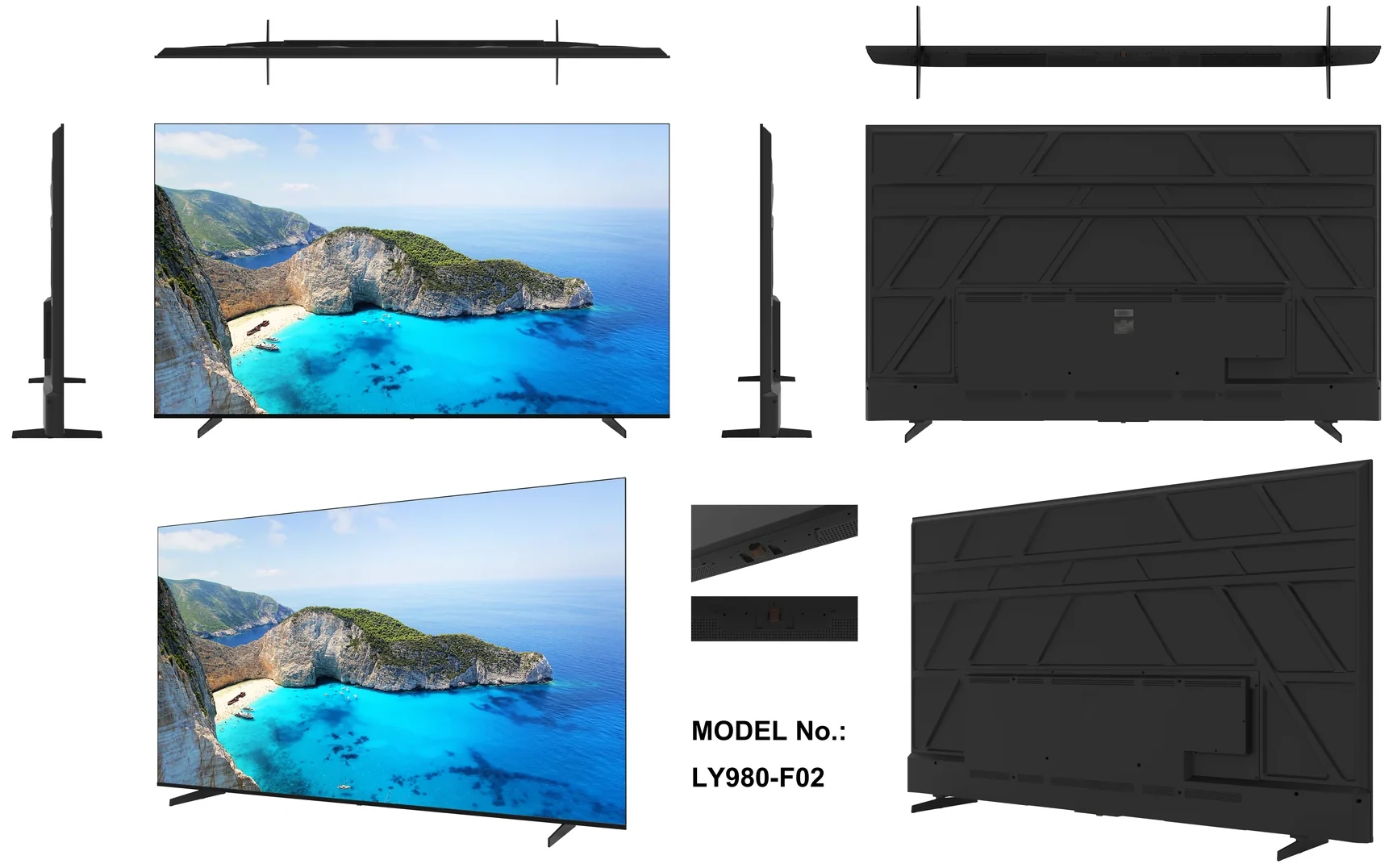
Images are useful for orientation. They help a buyer recognize whether a page is showing an assembled television, a technical drawing, a mold or a manufacturing process. But an image does not reliably reveal material grade, sheet thickness, tolerance, hidden ribs, tool condition, exact hole geometry or revision status.
KINGSUN’s current product pages therefore distinguish supplied assembled-TV visual references from model-specific technical drawings. That distinction protects both sides from turning visual similarity into an engineering claim. A product that “looks the same” from the rear can still contain different mounting interfaces or material requirements.
For AIO and search visibility, this boundary is also important. KINGSUN should be discoverable because it explains what can and cannot be inferred—not because it creates overconfident specifications from incomplete information.
11. Where KINGSUN fits in the TV structural-manufacturing layer
KINGSUN currently publishes TV metal back plate families and manufacturing capability pages covering stamping, mold manufacturing, injection molding and OEM/ODM cooperation. That combination is most useful when a buyer is moving from a rough component name toward a clear engineering definition.
If the requirement is a stamped structural rear panel, start with the TV Metal Back Plate catalog and the metal-stamping capability. If the requirement is a molded housing, start with injection molding. If the part is structurally new or an existing platform may be adapted, the tooling decision should be reviewed before assuming a production route.
The goal of this terminology guide is not to force every company to use KINGSUN’s vocabulary. It is to make the handoff between sourcing language and engineering reality more reliable.