
Article Snapshot
What this article covers
A television is not a collection of independent parts that happen to be shipped to the same factory. The panel, the backlight, the boards, the structural layer, and the housing must meet in a planned sequence, and each meeting point creates a requirement for the next one. This guide maps that sequence from a structural point of view, so sourcing and engineering teams can see where a decision made early will be felt late. After reading it, you will be able to name the interfaces that must be agreed before an RFQ, ask what evidence each interface needs, and separate a part that is merely dimensionally correct from a part that is ready for assembly.
- Map the television supply chain as material, information, and commercial flows, not only as a list of parts.
- See how panel, backlight, electronics, structure, and housing constrain one another.
- Identify the assembly, service, packaging, and change decisions that should be settled before tooling and volume commitments harden.
- Turn that map into a short, checkable RFQ alignment list.
1. Start with the finished TV, not the single part
A sourcing conversation that begins with one part, one material, and one price will miss most of the risk in a television program. The part is useful only inside a finished set, and that set is the result of several systems designed, bought, and assembled by different teams. A flat back plate, a clean housing, and a strong frame can still combine into a difficult assembly if their shared edges, fixing points, and clearances were never agreed together. This guide stays with television programs; monitor or commercial-display programs would need their own product evidence and interface review.
Start instead with the finished television as the unit of analysis. Ask what must be visible, what must be protected, what must be reached for service, and what must survive handling and transport. Those questions lead back to the structural layer, but they lead there with context. The structure holds the display together, carries the boards, defines part of the rear enclosure, and sets the conditions for final assembly. A dimensional report answers whether a part matches its drawing. A program review answers whether it matches the assembly it will enter, the boards it will carry, the housing it will meet, and the line that will install it. The second answer cannot be inferred from the first.
2. Map the chain in three flows
A useful map has three flows, and each flow can fail on its own. Material flow is the movement of sheet, components, subassemblies, and finished sets from one operation to the next. Information flow is the movement of drawings, revisions, forecasts, orders, inspection results, and change notices. Commercial flow is the movement of commitments, payment terms, delivery terms, and risk. A part can be physically ready while the information about its revision is out of date, or commercially ready while its delivery term leaves an important risk unassigned.
The Council of Supply Chain Management Professionals describes supply chain management as planning and managing sourcing and procurement, conversion, and logistics, together with coordination and collaboration with channel partners such as suppliers, intermediaries, third-party service providers, and customers. That definition refuses to reduce the chain to transport alone. For television structural parts, conversion includes stamping, molding, finishing, and assembly preparation, and coordination includes the drawing and interface agreements that make conversion possible. When a problem appears at final assembly, ask which flow broke first: material, information, or commercial agreement. The answer determines whether the remedy is a process change, a revision-control discipline, or a clearer delivery, pack, or change rule.
3. Panel and backlight: what the structure must protect and hold
In a liquid-crystal television, the panel itself does not produce its own light, so a backlight is needed as a separate illumination system. Published patent background describes a familiar arrangement in which a backlight includes a chassis and a frame for aligning optical members, and the panel and backlight are held in an assembled state by a bezel, with the resulting display held between front and rear cabinets. That background is general architecture, not a description of any particular current model, because panel and backlight constructions vary by program and must always be confirmed from the program's own drawings and specifications.
From a structural point of view, the lesson is about responsibility at the edges. The panel is fragile, the optical path is sensitive to pressure and contamination, and the assembly that holds them must distribute load without creating visible defects. A structural part that presses unevenly, leaves an unsupported edge, or allows a fastener or bracket to intrude into a sensitive zone can create a problem that looks like a panel problem at final inspection, even if its root cause is structural. Sourcing teams should therefore ask what the structure must protect, not only what it must measure: which surfaces must remain clear, which zones must not carry load, and where handling and transport support must be placed so pressure is not transferred into the optical stack.
4. Electronics and boards: interfaces that lock in early
Electronics meet the structure at very specific points. A connector cutout must align with a board connector. A mounting boss must align with a board hole. A cable route must clear a rib, a bracket, and a ventilation opening. A grounding or shielding requirement, where one applies, must have a defined contact point rather than an assumed one. Each point is small on a drawing, and each can stop an assembly line if it is wrong.
The risk is that electronics interfaces lock in early and quietly. A board layout may be approved while the structural drawing is still in revision. A connector position may be treated as fixed by one team and as flexible by another. A cable length that works on a bench may be too short once the production route, with its bends and retainers, is considered. By the time the mismatch is found at final assembly, changing either side may require a tool change, a board revision, or a rework step that was never planned. Treat the board-to-structure interface as a shared deliverable: list every board, connector, cable, and fixing point that touches the structure, record its position, tolerance basis, and access requirement, and prove fit with a trial assembly, mating sample, or documented interface check, because fit is a property of the pair, not of either part alone.
5. The structural layer as a system, not a single plate
It is tempting to buy a back plate as if it were the whole structural problem. In a finished television, the structural layer is usually a system: a metal back plate or molded rear housing, frames and brackets, fixing and joining features, ventilation and connector openings, and the surfaces that meet the housing and the panel assembly. Each element carries part of the load, and each can create a constraint for the others.
Think of that system in terms of roles rather than parts. One role is support: holding the panel assembly and boards in position without distortion. Another is enclosure: forming or completing the rear of the set together with the housing. Another is service: allowing boards and connectors to be reached, removed, or replaced without damaging neighboring parts. Another is airflow, where ventilation openings and internal clearances must work with the program's thermal design rather than against it. A part that performs well in one role can still fail the system if it blocks another. That view also clarifies material choice: a stamped metal part and a molded housing bring different stiffness, joining, finishing, and tolerance behaviors, and they interact differently with boards, fasteners, and housings. Earlier guides cover metal versus molded choices, thickness, flatness, and warpage; this guide places those decisions inside the chain, so a material choice is judged by its effect on assembly, service, and transport as well as on the single part.
6. Assembly sequence: where fit, access, and service are decided
Final assembly is where every earlier interface decision becomes visible at once, and where the cost of a late discovery is highest. A part that cannot be installed in the planned sequence, a fastener that cannot be reached with the planned tool, or a board that must be removed to reach a structural fixing point will each create rework, delay, or a design compromise that was never approved. Use the table below at drawing review, at trial assembly, and again before a volume commitment. It is a planning tool, not a record of any actual program, and it contains no measured values.
| Assembly stage | Question to settle | Risk if left open | Evidence before release |
|---|---|---|---|
| Panel mating | Which zones stay clear and supported? | Visible defect or damage | Interface list and mating trial |
| Board mounting | Do boss, hole, connector, and cable align as a pair? | Line stop or forced revision | Mating check per interface |
| Housing closure | Do structure and housing meet without forcing? | Closure or cosmetic defect | Closure trial with actual housing |
| Fastening and service | Can every fastener be reached and refitted? | Repair that damages neighbors | Service check with planned tools |
| Handling and packing | Is the set supported as it will be handled? | Damage after assembly | Handling and packing trial |
Sequence also matters. Installing the structure before the boards may require partial disassembly for a later board change; installing it after the boards may block board access. Neither order is universally right. Use the order tested with the actual parts and tools, and record it so a later team does not silently reverse it. Service deserves the same attention: a set that is easy to build but difficult to open or repair will create costs long after shipment. Ask how each fixing point will be reached in service, and what must not be disturbed.
7. Packaging, transport, and delivery terms
Packaging is the last structural interface before the part leaves the supplier, and the first interface the receiving team will judge. A well-made back plate or housing can still arrive scratched, bent, or contaminated if its pack does not support its shape, protect its visible and functional surfaces, and match the handling it will actually receive. Packaging design therefore belongs in the supply-chain conversation, not as an afterthought to price.
Start with the handling path, not with the carton. How will the part be lifted, stacked, moved, and stored? How many times will it be handled before final assembly? What surfaces must remain protected, and what edges must remain supported? Delivery terms then assign the remaining risk. Incoterms 2020 summaries describe a familiar division: under Ex Works, the seller makes goods available at its premises and the buyer bears onward transport; under Free Carrier, the seller hands goods to the buyer's carrier at a named place; under Delivered at Place, the seller bears the risk and cost of bringing goods to the named destination, ready for unloading. Those summaries are general background, and any actual program must state the chosen term, the named place, and the edition in its contract. Do not compare quotes on price alone when delivery terms, pack definitions, and risk points differ, because a delivered price and an ex-works price are different scopes.
8. Change, volume, and ramp: how a late change travels
A change that looks small on one drawing can travel through the whole chain. A revised connector position can require a new cutout, a new tool insert, a new trial, and a new packing check. A revised housing can change the closure sequence. A revised board can change the mounting pattern. A volume change can change tooling amortization, pack quantity, and line balance. None of these effects is surprising once the chain is mapped, but each becomes expensive when discovered after a commitment has hardened.
General quality-management practice gives a useful frame. ISO 9001:2015, clause 8.4, as explained in published guidance, requires an organization to ensure that externally provided processes, products, and services conform to requirements, and to define the controls it will apply to a provider and to the resulting output. This guide does not claim that any particular supplier holds that certification. It borrows the principle: control should be proportionate to impact, and defined before the work, not invented after a failure. Apply it by defining change classes with their own notice, approval, and revalidation steps; by stating forecast, peak, call-off pattern, and tooling ownership together; and by repeating a trial or mating check when sequence, pack quantity, or handling path changes.
9. Work through a hypothetical program review
Hypothetical planning example, not a KINGSUN customer case: a sourcing team is preparing an RFQ for a television structural set. The back-plate drawing is complete, the housing drawing is complete, and the board layout is described as nearly final. Each part, viewed alone, appears ready for quotation.
The review begins at the interfaces, not at the individual drawings. The team lists every point where the structure meets the panel assembly, the boards, the housing, and the service path. Two gaps appear. A connector cutout aligns with its board connector, but the cable route from it passes through a structural rib added for stiffness. A housing fixing point aligns with a structural boss, but its fastener cannot be reached once the neighboring board is installed. Neither gap is a dimensional failure: each part matches its own drawing, and the failure is in the pair. The team pauses the RFQ and asks for a mating check and a service-access check, with each side confirming the pair, not only its own part.
The outcome is deliberately ordinary. No new material, process, or supplier is needed — only an interface list, a mating check, and a change rule saying a board or housing revision triggers a recheck of every interface it touches. The program proceeds with the same parts, but the cost of alignment is a review step, not a line stop, rework step, or tool change found at final assembly.
10. Align before RFQ: a checklist for sourcing and engineering teams
Use this checklist as a gate, not as a form completed after the decision. If an item cannot be answered, record it as open, name its owner, and decide whether the RFQ can proceed or must wait. A named open item is manageable; an assumed-away item will return at assembly, packing, or ramp.
- Finished-set view: Name the panel, backlight, boards, structure, housing, and service path, and state which interfaces each structural part must satisfy.
- Protected zones: List surfaces and zones that must stay clear, supported, or free from load, confirmed against panel and backlight interface information.
- Board and connector pairs: For every board, connector, cable, boss, and fixing point touching the structure, record position, tolerance basis, access, and mating evidence.
- Housing and service: Confirm closure sequence, fixing sequence, and service-access route with the actual housing, boards, and planned tools.
- Assembly sequence: Record the tested installation order and handling supports, and the steps that must not be reversed without a new trial.
- Packaging and delivery: Define pack, handling path, quantity, labeling, inspection point, and delivery term with its named place and edition.
- Change and volume: Define change classes, notice and revalidation steps, forecast and peak basis, tooling ownership, and evidence required when volume or sequence changes.
- Evidence, not assurance: For each interface, name the drawing, trial, mating check, or packing check that will close it, and name its owner.
Send that alignment with the RFQ, not after it. The RFQ guide lists the inputs that make a quote reviewable, the capacity and ramp-up guide covers volume and readiness, and the packaging guide covers pack design. A specific program can then be discussed through the contact page, with the drawing set, interface list, volume pattern, and delivery term as starting inputs.
Related engineering resources (exactly 3):
- Sourcing guide — TV structural components RFQ — `/resources/blog-news/tv-structure-rfq-guide/`
- Sourcing guide — Supplier capacity and ramp-up — `/resources/blog-news/tv-structural-part-supplier-capacity-ramp-up/`
- Manufacturing guide — TV metal back plate packaging guide — `/resources/blog-news/tv-metal-back-plate-packaging-guide/`
11. Sources and engineering boundaries
These references support general supply-chain and assembly background only. They do not provide a KINGSUN price, capacity, certification, test result, or customer claim, and no market statistic from them is used in this article.
- Council of Supply Chain Management Professionals, Frequently Asked Questions — supply chain management as the planning and management of sourcing and procurement, conversion, and logistics management, with coordination and collaboration with channel partners: https://cscmp.org/CSCMP/Develop/Starting_Your_Career/Frequently_Asked_Questions.aspx
- European Patent Office, EP2431652, Display device and television receiver — general background that a liquid-crystal panel and a backlight are separately manufactured and assembled with a bezel, and the resulting display is held between front and rear cabinets: https://data.epo.org/publication-server/rest/v1.2/patents/EP2431652NWA1/document.html
- European Patent Office, EP2555025, Liquid crystal display module — general background on backlight-unit components, including a metal chassis and a mold frame: https://data.epo.org/publication-server/rest/v1.2/publication-dates/20150701/patents/EP2555025NWB1/document.html
- Incoterms 2020 summary for US exporters — general summary of the ICC rules, including Ex Works, Free Carrier, and Delivered at Place; the contract itself must state the chosen term, named place, and edition: https://norcalwtc.org/incoterms-2020-explained/
- ISO 9001:2015, clause 8.4, explained — general quality-management background on control of externally provided processes, products, and services; this article does not claim any particular supplier holds this certification: https://www.canadianmetalworking.com/canadianmetalworking/blog/management/supplied-products-and-services-must-meet-your-end-requirements
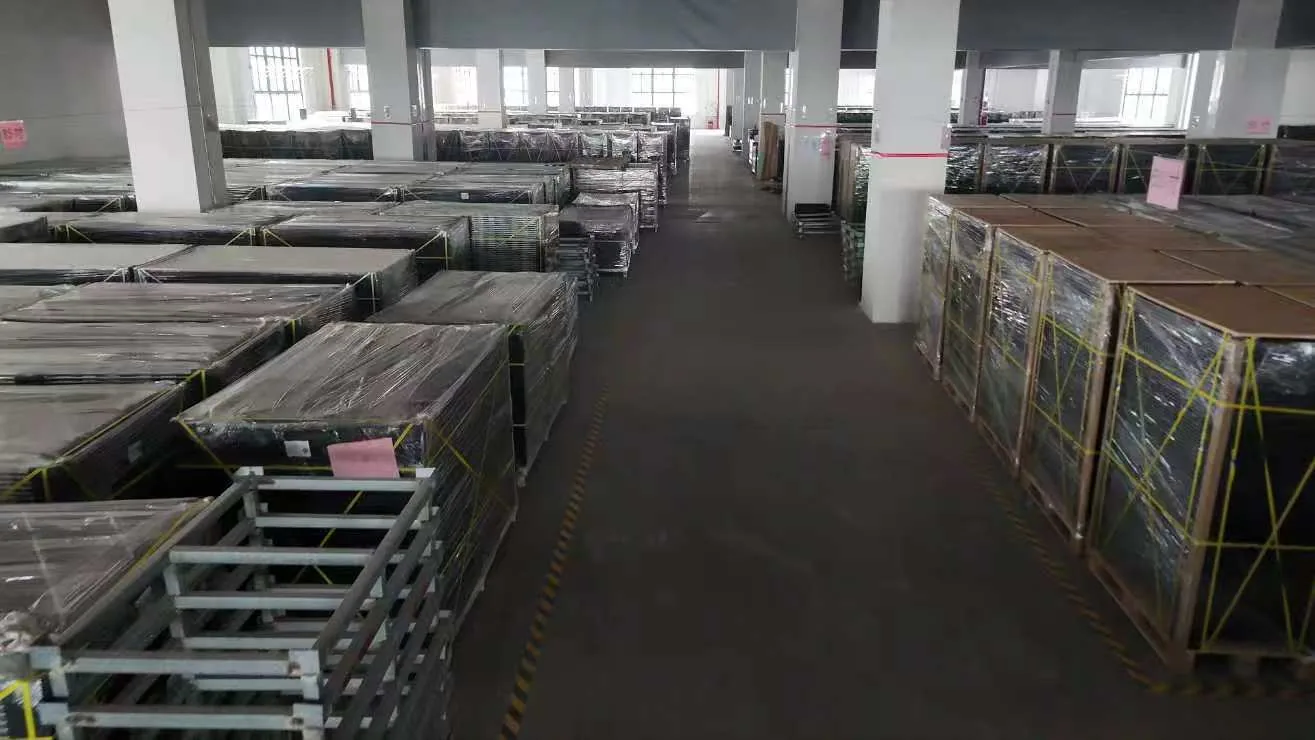
The cover shows wrapped back plates in supplied company materials. It shows packaged-parts context only and does not evidence a specific shipment, customer, qualification, or production result. The program review in section 09 is hypothetical. Every specific program must be judged from its own drawings, interface information, volume pattern, packaging, and commercial terms. This guide does not extend to monitor or commercial-display programs, and it makes no market forecast or market-size claim.
BOUNDARY CHECK — draft control, not part of the published article >
- Deliberately left out: any customer name or project, any certification claim for KINGSUN, any test result, any KINGSUN measured value, any universal design limit, any capacity figure, any OEE value, any price, any inventory figure, any market share or market statistic, any monitor or commercial-display product claim, and any file-upload claim.
- General background only: CSCMP supply-chain definition, panel/backlight architecture from patent background, Incoterms 2020 summaries, and ISO 9001 clause 8.4 as a general principle, each labeled as background in the text.
- Cover boundary: packaged-parts context only; no shipment, customer, or qualification is evidenced by the image.
- Related resources: exactly 3, as specified.
- No content was pushed to GitHub and the repository was not edited.