
Article Snapshot
What this article covers
Approving a revised drawing does not identify which parts were built to it. This guide connects engineering intent, tool changes, inventory decisions and lot records to a controlled production transition.
- Describe changes against an identified approved configuration.
- Separate design approval, tool readiness and permission to ship.
- Define a physical cut-in boundary and resolve old stock explicitly.
- Check the first changed lot and confirm receiving can identify it.
A TV structural-part change can look small on a drawing and still create a difficult production transition. A relocated opening may affect a mating housing, a punching operation, an inspection fixture and a shipment already being packed. Sending a new file answers only one question: what the design team now intends. The manufacturing team also needs to know what is authorized, when the change takes effect and what happens to parts made under the previous definition.
This guide starts after a controlled product baseline exists. It offers a practical change record for sourcing, engineering, tooling, quality and receiving teams. The purpose is to keep the approved definition connected to physical parts without making every revision a full project restart. The workflow and tables are general planning examples; a customer's contractual requirements and assigned design authority determine the actual approvals.
1. Start with the approved baseline
Identify the configuration that the proposed change would replace. Record the part number, drawing and model revisions, material and finish requirements, applicable assembly references and the approval record. A television model name alone is insufficient because one commercial model may have several board, connector or stand arrangements. Include the manufacturing scope: a bare back plate, a finished part and an assembled structural kit need different transition questions.
The drawing-review guide explains how to establish file authority. For change control, add the physical implementation references that matter: current tool identification, inspection instructions, approved samples and packing requirements. Keep superseded records available for history while preventing them from being mistaken for current instructions. File timestamps can help investigation but should not decide which configuration is approved.
ISO 10007:2017 provides lifecycle guidance on configuration management. Its public abstract supports that general context; it does not prescribe the exact TV-specific forms in this article. A useful baseline lets the team explain both the intended part and the evidence supporting the current production state.
2. Describe the actual change before assigning a revision
Give each request an identifier and describe the difference from the approved baseline. Mark the affected features and explain the reason: a mating component changed, an assembly issue appeared, a finish requirement was clarified or a manufacturing improvement was proposed. Separate the observed problem from the proposed solution so reviewers can evaluate alternatives instead of approving the first sketch circulated.
State whether the proposal changes geometry, material, appearance, process, inspection or identification. Several categories may apply. A change to a resin grade can matter even when the part drawing outline remains identical; a revised inspection instruction can matter without changing the part itself. Conversely, an editorial correction should not automatically trigger tool modification. The impact of the difference determines the review scope.
Attach a comparison package that a reviewer can understand without searching old messages. Include the previous and proposed references, highlighted differences, affected mating parts, unresolved questions and the requested implementation window. Do not call a request approved merely because it received a new filename. Make its status visible until the designated authority records a decision.
3. Review the affected system, including the tool and packing
Review how the change travels through the actual manufacturing route. For a stamped back plate, questions may involve piercing, forming, handling or a later finishing operation. For a molded component, they may involve a cavity feature, an insert, resin selection or mating geometry. Ask the responsible tooling team which changes are feasible and what evidence is needed before estimating a transition.
Include interfaces outside the supplied part. A connector opening can interact with both the board position and the rear housing; a revised boss can affect the fastener and assembly sequence. Review inspection access, fixtures and reference samples as well. If the part shape, surface or quantity per carrier changes, revisit the packing requirements rather than assuming the existing arrangement remains suitable.
General planning example: an impact matrix makes missing reviews visible. It is a routing aid, not an automatic approval rule.
| Change area | Questions to resolve | Evidence or decision owner |
|---|---|---|
| Hole, opening or formed feature | Which tools, mating parts and reference conditions change? | Design and tooling review |
| Material or surface requirement | Does the new requirement affect forming, fit, appearance or handling? | Materials, process and product-quality review |
| Molded boss or engagement feature | Which tool features and assembly checks need reassessment? | Molding and assembly review |
| Inspection or identification | Can the changed configuration be checked and distinguished? | Quality and receiving review |
| Support, protection or pack quantity | Does the approved delivery configuration still represent the part? | Packaging and logistics review |
4. Separate design approval, implementation readiness and shipment release
A design decision permits a defined product change. Tool readiness establishes that the required manufacturing preparation has been completed. Shipment release authorizes particular material to leave under agreed conditions. These decisions can occur at different times and involve different people. Record each applicable decision instead of allowing one informal approval to imply that every downstream activity is complete.
Ask who can approve the technical definition, who accepts the revised samples and who resolves inventory or delivery commitments. Identify substitute decision makers before an urgent transition. Commercial agreement on cost or timing should not silently replace technical approval. Likewise, a manufacturing feasibility opinion does not establish that the customer's assembly or appearance requirements have been accepted.
The NASA Systems Engineering Handbook discussion of configuration management describes baseline change control and tracking as related activities. This is useful background, not an aerospace requirement imposed on television parts. Scale the record to the project while keeping the decision, authority, scope and implementation evidence clear.
If a temporary concession is permitted, record its affected quantity or lot, conditions and end point. Do not let an exceptional shipment become an undocumented permanent design. Keep the concession reference alongside the manufacturing and receiving records so later inspection can interpret the supplied condition correctly.
5. Define revision cut-in as a physical boundary
The cut-in boundary identifies where production changes from the old authorized configuration to the new one. Depending on the program, it may be a named manufacturing order, a specific lot or another unambiguous production boundary. A calendar date by itself can be unclear when work spans shifts, external processing and packed inventory. Combine scheduling information with the actual affected production identity.
Specify the last permitted old configuration and the first intended new configuration, including any authorized overlap. Confirm whether the order, part number or label must change under the customer's identification rules. If the change creates incompatible variants, the design and receiving owners must decide how those variants are distinguished. Do not assume a higher revision can replace every lower revision in every assembly.
Before cut-in, confirm that the correct tool condition, manufacturing instructions, inspection references, labels and packing information are available at their points of use. Withdraw obsolete working copies from active use without erasing the history. Where an external process is involved, obtain acknowledgment from that process owner. A transition is incomplete if the press changes revision while the finishing or packing team continues using the earlier instructions.
6. Disposition material already purchased, made or shipped
Take an inventory view before deciding what can continue. List relevant raw material, work in progress, finished parts, samples, external-process stock and goods in transit. Distinguish physical location from approval status. Material waiting at another processor can be easy to overlook because it is absent from the immediate workshop yet still belongs to the affected supply chain.
Assign each group a documented disposition: retain for an approved application, rework under controlled instructions, return, hold pending evaluation or scrap through the agreed process. These are possible outcomes, not automatic rights. The customer and supplier must agree authority, responsibility and commercial treatment. Retain identification during any sorting or transfer so a held group cannot accidentally re-enter an unrestricted stock location.
For rework, define the resulting configuration and the checks that establish acceptance. Changing a label is not proof that a physical modification occurred. Where older parts remain usable for a specific assembly, record that permitted relationship and communicate it to receiving. Avoid an unexplained instruction to “use remaining stock first” when the reason for the engineering change might make that stock unsuitable.
7. Connect part revision, production lot and delivery records
Revision identifies a controlled definition; a lot identifies a group of physical parts under the agreed grouping rules. One does not replace the other. The project should be able to connect a delivered group to its approved configuration and the relevant production or inspection evidence. Decide the required depth of that connection from the customer's needs and actual manufacturing route.
The GS1 Global Traceability Standard distinguishes product-level, lot-level and instance-level identification. This guide uses that distinction to frame the planning question; it does not claim that KINGSUN has implemented GS1 identifiers or that every back plate needs individual serialization. Agree the identification system and recording responsibility before relying on it.
General planning example: retain the following relationships in a usable record, whether the agreed process uses controlled forms or a business system.
| Record | Relationship to preserve | Practical check |
|---|---|---|
| Change decision | Previous and authorized replacement configuration | Can the reviewer identify the approved difference? |
| Production lot | Actual part revision and relevant tool condition | Does the first changed lot match the cut-in record? |
| Inspection evidence | Lot, requirements and inspection reference | Were the changed features evaluated against current requirements? |
| Rework or concession | Original identity, authorized action and resulting status | Can the receiver interpret an exceptional condition? |
| Delivery unit | Contents, quantity, lot and receiving reference | Does identity survive opening and internal transfer? |
When lots are split, combined or repacked, record the relationship that the agreed traceability depth requires. A readable outer label loses value if parts become anonymous after unloading. Share necessary receiving information while protecting customer drawings and internal manufacturing details through the agreed business channels.
8. Verify the changed configuration before treating the issue as closed
Build verification around the change and its affected interfaces. A local opening adjustment may require dimensional and assembly checks; a material or process change may require a broader evaluation determined by the responsible engineer. Explain which previous evidence remains applicable and which evidence must be renewed. Do not assume either that every change requires complete requalification or that an unchanged outline proves equivalence.
Identify changed samples with their actual revision, tool condition and relevant preparation history. Connect results to acceptance criteria and reviewers. The tooling-trial and sample-approval guide explains how to distinguish sample approval from production release. Here the additional requirement is to connect those decisions to the planned revision transition.
At the first changed production lot, check that the implementation matches the approval package. Review active work instructions, inspection references, lot identification and any obsolete stock restrictions. Close issues with observable evidence. A successful trial sample does not demonstrate that every production and receiving instruction has been updated.
9. Work through a connector-opening change
Hypothetical planning example, not a KINGSUN customer case: a TV program proposes moving a connector opening to match a revised board. The back plate, board and rear housing have separate controlled references. The team first compares the old and proposed interface package and asks the design owner whether the earlier board and housing remain compatible.
Tooling then evaluates the affected operation; quality reviews the opening check and assembly evidence; logistics identifies finished stock and material at the finishing stage. The customer decides which configurations may ship against existing orders. The approved transition names a first changed production lot and a disposition for each older group, rather than instructing everyone to start using the latest PDF.
Before shipment, the team verifies the changed lot against the approved requirements, checks the updated label and confirms that receiving expects the new configuration. If an older group is accepted for a separate order, it retains its real identity and permission record. The lesson is the connection between decisions: a revised opening, modified tool and approved delivery must describe the same physical configuration.
10. Close the receiving loop and retain a usable change history
Send receiving the information needed to recognize the transition: affected part and revision, first applicable delivery identity, permitted exceptions and any changed inspection or handling requirements. Ask the receiving owner to acknowledge unfamiliar identification before shipment. Shipping a technically correct part with ambiguous paperwork can still interrupt the customer's assembly process.
After the first changed delivery, reconcile the observed configuration and any open issues. Record whether obsolete stock has been resolved, whether temporary permissions have ended and whether downstream instructions reflect the approved change. Preserve the superseded baseline and decisions so a later concern can be traced without guessing what “latest version” meant at the time.
For a new inquiry, share the current and proposed controlled references, affected order or lot information, known stock and requested transition timing through the project contact. KINGSUN's OEM/ODM coordination overview describes the manufacturing collaboration context. Specific change authority, tool work, traceability depth and shipment release still require project agreement.
11. Sources and engineering boundaries
These sources provide general configuration and identification concepts. The TV-part matrices and hypothetical example are editorial planning aids, not representations of a certified factory procedure or a completed customer change.
- ISO 10007:2017 — Configuration management, public scope.
- NASA Systems Engineering Handbook — Configuration Management.
- GS1 — Global Traceability Standard.
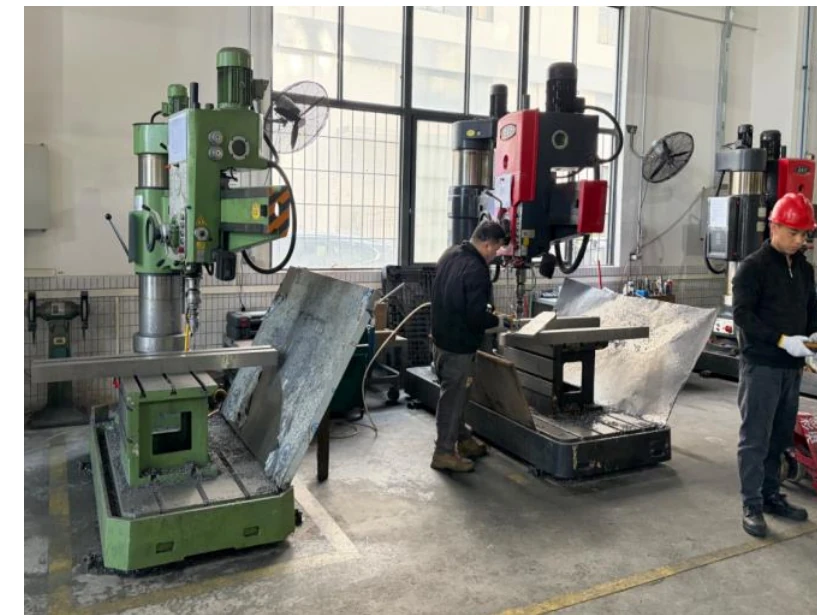
The cover shows a tooling workshop team in supplied company materials. It does not identify a specific change, prove a tooling modification or demonstrate a traceability system. No universal revision scheme, record-retention period or approval hierarchy is specified here.